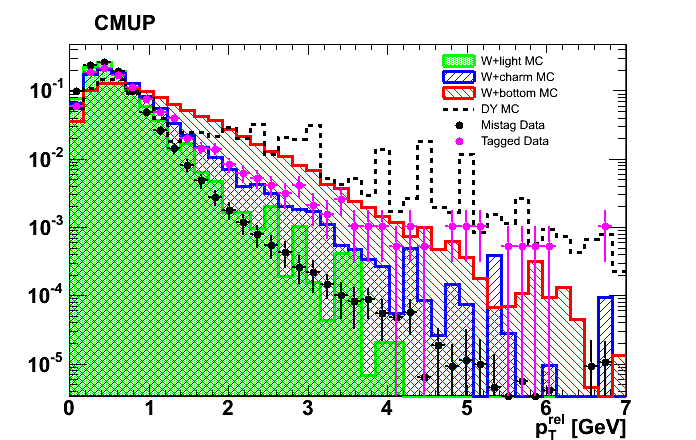
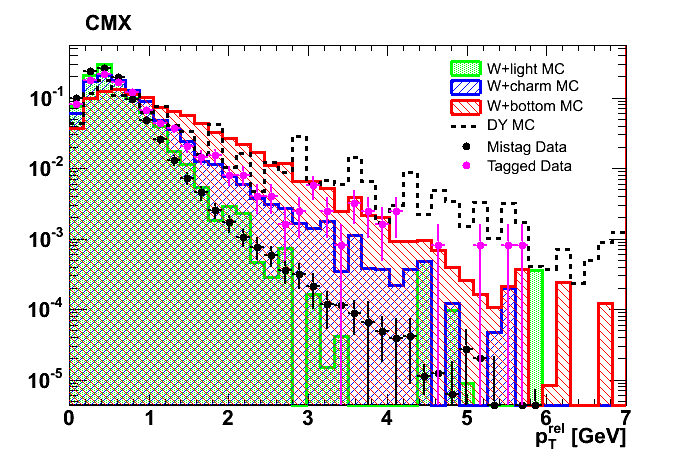
The heavy-flavor contribution is found by fitting the pTrel and signed d0 of soft electrons. The shapes of the various templates are too similar to each other, so I combined the bottom and charm templates into a single “heavy” template and fit a*(light) + b*(heavy). The electron-triggered and muon-triggered data give the same result (heavy fraction is 0.22.) The soft muon fits don’t work with the low-lumi template. (every template happens to have a 0 in a particular pTrel bin where we do have a data point. This problem will go away when we use the high-lumi templates.)
TCE trigger:

CMUP/CMX trigger:

Here’s the table of predicted and observed values:
| Trigger | Soft Leptons | Predicted | Observed |
| TCE | e | N/A | 2428 |
| TCE | mu | N/A | 328 |
| TCE | e+e | 117.7 | 125 |
| TCE | e+mu | 48.6 (from e) / 16.4 (from mu) | 17 |
| TCE | mu+mu | 16.9 | 1 |
| Muon | e | N/A | 3310 |
| Muon | mu | N/A | 1504 |
| Muon | e+e | 146.9 | 206 |
| Muon | e+mu | 66.6 (from e) / 75.3 (from mu) | 108 |
| Muon | mu+mu | 77.5 | 38 |
I think the next step is to improve the parameterizations of efficiency and fake rate for soft leptons (of both types) in the MC. neither one is looking great right now. Below the fold, see pT and eta plots of soft electrons and soft muons: Continue reading new expected/observed soft lepton numbers